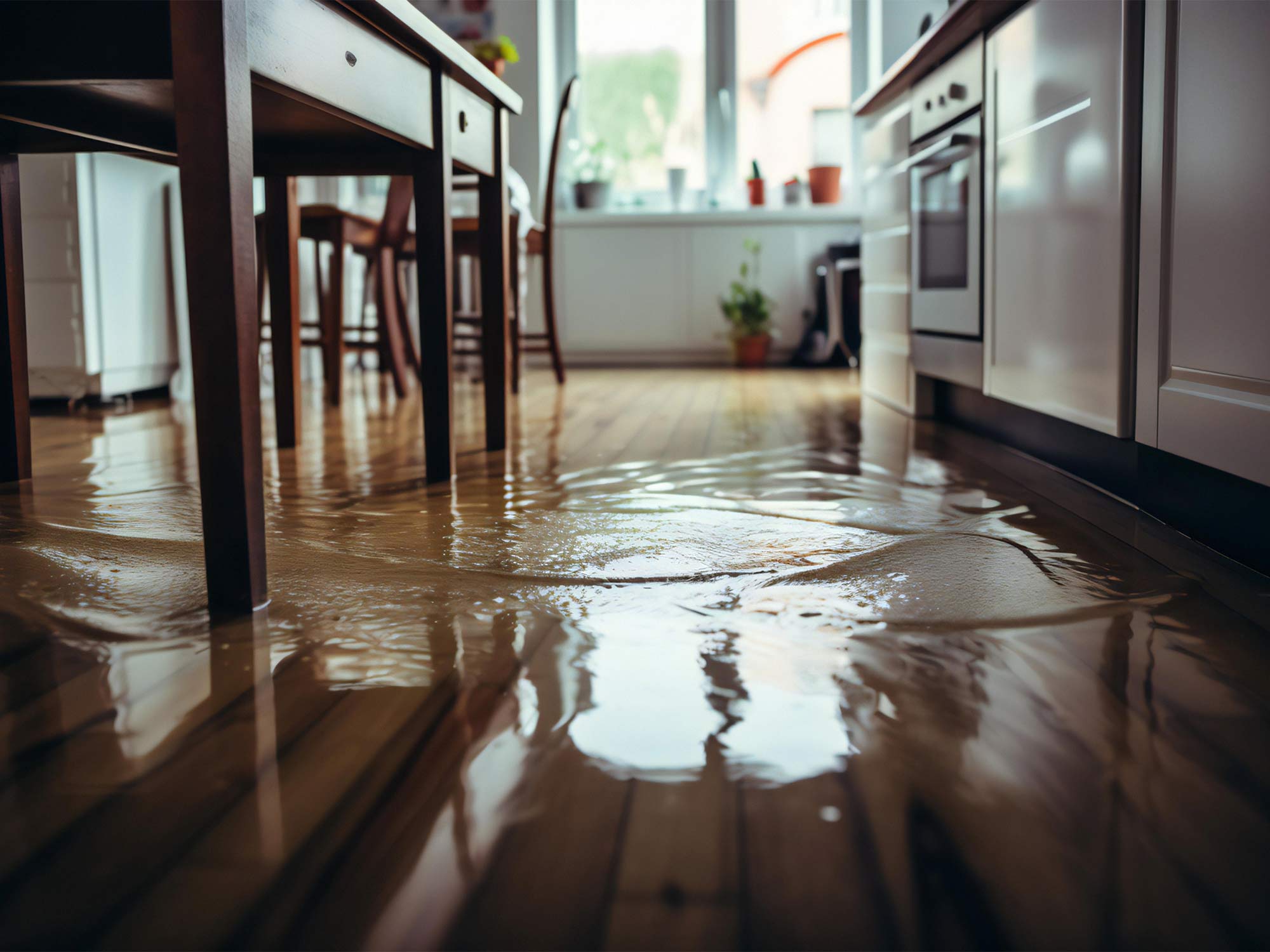
Professional leak detection helps Tampa Bay homeowners locate hidden plumbing leaks while avoiding unnecessary damage and expensive exploratory repairs.
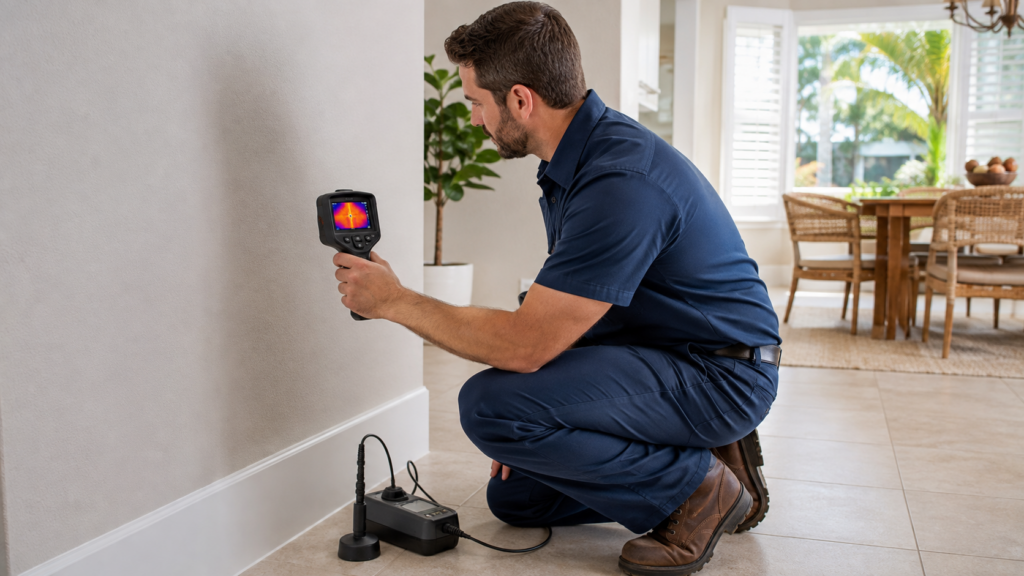
How Professional Leak Detection Saves Money on Plumbing Repairs
A hidden plumbing leak can quietly increase your water bill, damage flooring, encourage mold growth, and weaken drywall or cabinetry. The longer the leak remains active, the more expensive the repairs can become.
Unfortunately, finding the source is not always as simple as looking for dripping water. Water can travel along pipes, framing, flooring, and concrete before appearing several feet away from the actual leak.
Professional leak detection helps locate the source with greater accuracy before walls, ceilings, cabinets, or floors are opened. This allows the plumber to focus on the affected area, reduce unnecessary demolition, and recommend the most cost-effective repair.
Quick Answer
Professional leak detection can save homeowners money by narrowing down the location of a hidden leak before repairs begin. Technicians may use acoustic listening equipment, thermal imaging, moisture meters, pressure testing, and electronic pipe-location tools to investigate the problem.
The goal is not to eliminate every opening. A plumber may still need access to the damaged pipe. The benefit is creating one carefully targeted opening instead of several exploratory holes throughout the home.
For Tampa Bay homeowners, early detection can also help prevent damaged flooring, mold growth, higher water bills, and repeated emergency plumbing repairs.
Why Hidden Plumbing Leaks Become So Expensive
A small pipe leak does not always stay small.
Even a slow leak can release water into areas that homeowners cannot see. Moisture may collect beneath flooring, inside a wall cavity, under cabinets, or below the concrete slab.
As the water spreads, one plumbing repair can turn into a much larger project involving:
- Drywall replacement
- Flooring or tile replacement
- Cabinet repairs
- Baseboard and trim replacement
- Structural drying
- Mold assessment or remediation
- Painting and finishing
- Temporary water shutoffs
- Increased monthly water bills
The cost of repairing the pipe may be relatively modest compared with the cost of restoring everything damaged around it.
That is why locating and stopping the leak quickly is so important.
The Problem With Exploratory Demolition
Without professional detection, finding a concealed leak may involve opening the area where water first appears and searching from there.
However, visible water damage does not always reveal the leak’s true location.
Water can:
- Run along the outside of a pipe
- Travel across a wall’s bottom plate
- Move between floors
- Follow framing or electrical penetrations
- Collect beneath tile or laminate flooring
- Surface through the lowest available opening
A stain on the ceiling may originate from plumbing several feet away. A damp wall may be caused by a pipe in an adjacent room. A warm section of flooring may suggest a hot-water slab leak, but it may not identify the precise failure point.
If the first opening does not expose the leak, additional sections may need to be removed. Each unnecessary opening adds labor, repair work, dust, disruption, and restoration expenses.
How Professional Leak Detection Works
Professional leak detection combines several diagnostic methods. The exact equipment used depends on the plumbing system, the location of the suspected leak, and the symptoms inside the home.
Acoustic Leak Detection
Water escaping from a pressurized pipe can produce vibrations or sound. Sensitive listening equipment may help a trained technician identify where that sound is strongest.
Acoustic testing is often useful when investigating concealed supply lines or possible leaks beneath a concrete slab.
Thermal Imaging
Thermal cameras identify temperature differences across walls, ceilings, and flooring. A leaking hot-water line may create a warmer area, while moisture and evaporation may produce cooler patterns.
Thermal imaging does not allow technicians to see through walls. Instead, it helps reveal temperature patterns that may indicate where further testing is needed.
Moisture Testing
Moisture meters help confirm whether drywall, wood, cabinets, or flooring contain elevated moisture. This is especially helpful when determining how far water has traveled from the suspected source.
Plumbing Pressure Testing
A pressure test can help determine whether a section of the water-supply system is losing pressure. Depending on the home’s plumbing layout, individual sections may be isolated to narrow the search.
Electronic Pipe Location
When plumbing routes are unknown, electronic equipment may help trace certain lines before cutting or drilling begins. Understanding where the pipes run can make the repair more precise.
No single test is perfect in every situation. An experienced technician may combine several methods to develop a more reliable diagnosis.
Leak Detection Compared With Guesswork
| Professional leak detection | Exploratory search |
|---|---|
| Uses diagnostic equipment to narrow the leak location | Relies primarily on visible damage and educated guesses |
| Helps reduce unnecessary openings | May require several openings to locate the pipe |
| Can document moisture and temperature patterns | Provides limited documentation before demolition |
| Helps plumbers plan the repair | Repair decisions are made as the area is opened |
| Usually causes less disruption | Can create additional dust, debris, and restoration work |
| May help limit ongoing water damage | The leak may continue while the search expands |
The price of leak detection varies according to the property, plumbing system, accessibility, and complexity of the problem. However, a diagnostic inspection may cost significantly less than repairing several unnecessary openings in tile, drywall, cabinetry, or concrete.
Example: A Suspected Slab Leak
Imagine that a Tampa homeowner notices a warm area on the living-room floor and receives an unusually high water bill.
Without diagnostic testing, a plumber might open the slab near the warm area. If the pipe turns or the water has traveled beneath the flooring, the first opening may miss the damaged section. More flooring and concrete could then be removed.
With professional leak detection, the technician can evaluate the plumbing pressure, inspect temperature patterns, listen for escaping water, and trace the suspected line. The plumber can then choose a more focused access point or determine whether rerouting the line would be more practical than opening the slab.
The result may be:
- Less damaged flooring
- Fewer concrete openings
- Lower restoration costs
- A shorter repair timeline
- Less disruption to the household
Example: Water Appearing on a Wall
A damp patch appears near the bottom of a hallway wall, but there is no sink, shower, or toilet directly behind it.
Opening the wall at the visible stain may not expose the leak. Water could be entering the wall several feet away and moving along the framing before soaking into the drywall.
Thermal imaging and moisture readings can help track the affected area. Once testing identifies the likely origin, the plumber can make a targeted opening and inspect the pipe.
Finding the leak early can also reduce the likelihood of extensive microbial growth inside the wall cavity.
Signs That You May Have a Hidden Plumbing Leak
Contact a plumbing professional if you notice any of the following:
- An unexplained increase in your water bill
- Water-meter movement when all fixtures are off
- Damp or discolored drywall
- Bubbling or peeling paint
- Musty odors
- Warm or unusually cool areas on the floor
- Cracked, loose, or discolored flooring
- The sound of running water when no fixture is being used
- Low water pressure throughout the house
- Repeated leaks in different areas
- Water collecting near cabinets or baseboards
- Unexplained mold or mildew
Turning off faucets and watching the water meter can help confirm that water is being used somewhere, but it will not tell you where the leak is located.
When Leak Detection Can Be Especially Valuable
Professional detection can be particularly helpful in the following situations.
Slab Foundations
Many Florida homes have water lines running through or beneath a concrete slab. Opening the wrong area can damage concrete, flooring, and finishes without exposing the leak.
Expensive Flooring
Tile, natural stone, hardwood, and custom flooring can be difficult or expensive to match. Targeted access may help preserve more of the original floor.
Multi-Story Homes
Water can travel between levels before becoming visible. Diagnostic equipment can help determine whether the source is above, below, or adjacent to the damaged area.
Older Plumbing Systems
In older homes, original plans may be unavailable and previous renovations may have changed the plumbing routes. Pipe-location tools and pressure testing can help clarify the layout.
Repeated Plumbing Leaks
When a home experiences multiple leaks, finding the newest failure is only part of the problem. Repeated pinhole leaks may indicate that sections of the plumbing system are deteriorating.
In that situation, continuing to pay for isolated repairs may no longer be the most economical solution.
Is It Time for a Repair or Whole-House Repiping?
A single leak in an otherwise healthy plumbing system may only require a localized repair. Multiple leaks, widespread corrosion, poor water pressure, or deteriorating pipe material may justify a broader evaluation.
Consider discussing whole-house repiping when:
- Your home has experienced several leaks
- Different sections of pipe have failed
- Your water is rusty or discolored
- Water pressure has gradually declined
- The home contains aging galvanized or polybutylene piping
- Corrosion is visible around fittings
- Repairs are becoming increasingly frequent
- You are renovating and want to address the plumbing before installing new finishes
A targeted repair may cost less today, but repeated repairs can become more expensive over time. Repiping replaces the deteriorating supply lines and addresses the larger plumbing problem instead of waiting for the next weak section to fail.
Depending on the home and plumbing layout, modern PEX or copper piping may be considered.
What Leak Detection Cannot Do
Professional leak detection is a diagnostic service, not a guarantee that no access will be required.
Homeowners should understand that:
- The damaged pipe may still need to be exposed for repair.
- Very small or intermittent leaks can be difficult to identify.
- Thermal imaging identifies temperature differences, not the pipe itself.
- Moisture may remain after the leak has stopped.
- Detection cannot predict every future pipe failure.
- Water-damage restoration may be required after the plumbing is repaired.
The goal is to gather enough evidence to make the opening and repair as focused as reasonably possible.
What to Do When You Suspect a Leak
If water is actively entering your home, shut off the main water supply when it is safe to do so. Move furniture and personal belongings away from the affected area and avoid using electrical outlets near standing water.
Do not wait for a small stain or damp area to dry on its own. Hidden moisture can continue damaging building materials even when the surface appears dry.
Once the source has been identified, request a clear explanation of:
- Where the leak is located
- What type of pipe failed
- Whether the problem appears isolated
- What access will be required
- Whether the pipe can be rerouted
- Whether other sections show signs of deterioration
- Whether a spot repair or repipe offers better long-term value
Professional Leak Detection Can Prevent Unnecessary Damage
The sooner a hidden leak is accurately located, the sooner the water can be stopped and the repair can begin.
Professional leak detection can help protect your home by reducing guesswork, limiting unnecessary demolition, documenting moisture, and creating a more direct path to repair.
If testing reveals one isolated failure, a targeted repair may solve the problem. If your Tampa Bay home has recurring leaks, deteriorating pipes, or low water pressure, whole-house repiping may provide better long-term protection.
Repiping Plumbers specializes in whole-house plumbing replacement for homeowners throughout the Tampa Bay area. We can help you compare PEX and copper repiping options and determine whether continuing to repair aging pipes still makes financial sense.
Call: Repiping Plumbers at (727) 243-9111 to discuss your plumbing concerns and request a whole-house repiping estimate.
Frequently Asked Questions
Is professional leak detection worth the cost?
It can be, especially when a leak is hidden beneath a slab, behind finished walls, between floors, or near expensive flooring. Accurately narrowing the location may prevent multiple unnecessary openings and reduce restoration expenses.
Can a plumber find a leak without cutting into the wall?
Diagnostic testing may help locate the likely source before anything is opened. However, the plumber will usually need access to the damaged pipe to confirm the diagnosis and complete the repair.
Does thermal imaging show pipes inside a wall?
No. Thermal imaging displays surface-temperature differences. Those patterns may help identify moisture or a leaking hot-water line, but they do not provide an X-ray view through the wall.
What is the most common sign of a hidden leak?
An unexplained increase in water usage is one of the most common warning signs. Other indicators include meter movement, damp drywall, warm flooring, musty odors, and the sound of running water.
Should I repair one leak or repipe my home?
A single isolated failure may only require a repair. Repiping may be more economical when leaks are recurring, the pipes are deteriorating, water pressure is poor, or the home contains problematic aging pipe materials.
Which repiping material is best for Florida homes?
PEX and copper both have advantages. PEX is flexible, corrosion-resistant, and often easier to install with fewer wall openings. Copper is durable and familiar but may cost more and can be affected by certain water conditions. The right choice depends on your home, budget, plumbing layout, and long-term priorities.